
**SEONIB Exclusive: Supports Keyword Search, Excel Bulk Import, and Real-Time Hotspot Insights via People Also Ask**
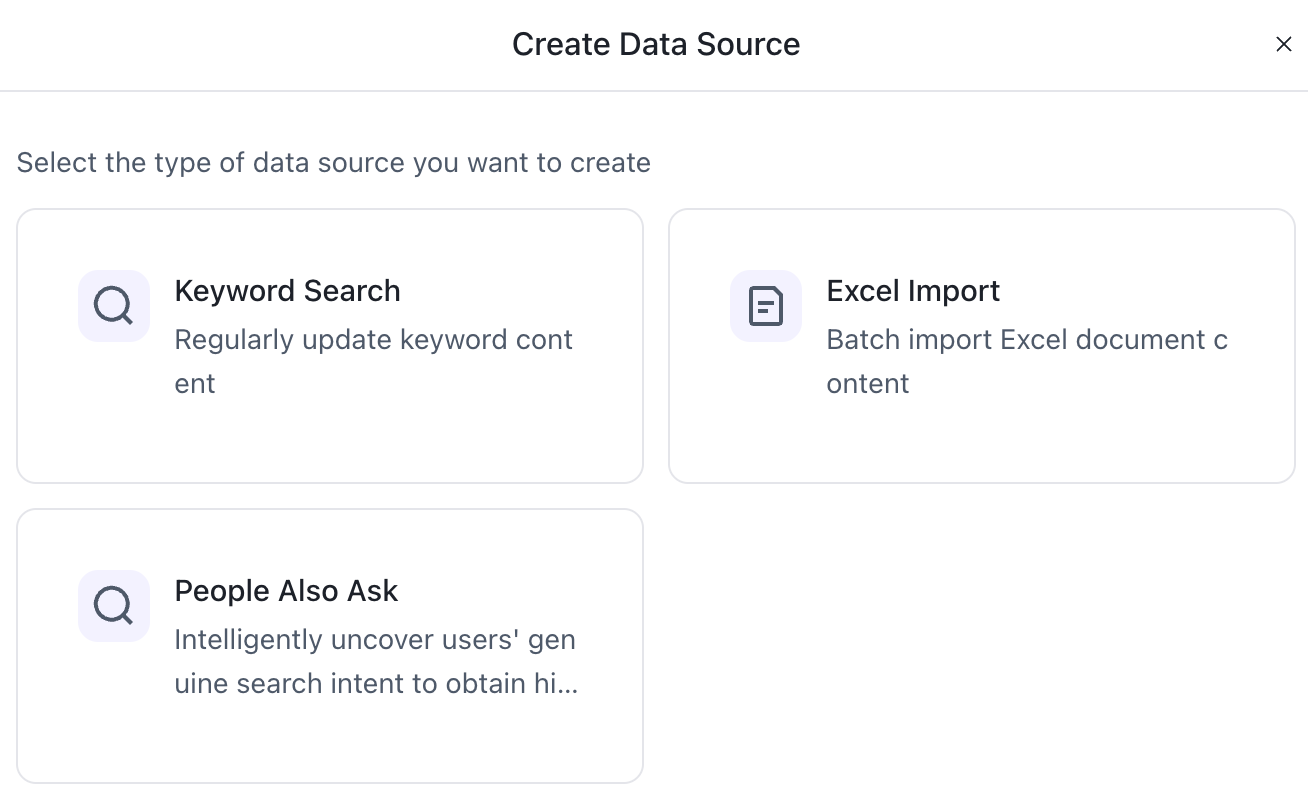
In today’s fiercely competitive content marketing landscape, the real differentiator isn’t “who writes faster,” but “who can quickly find topics worth writing about.” SEONIB turns this into an automated content pipeline: you can discover opportunities directly through keyword search, import a large number of topics at once with Excel bulk import, and leverage People Also Ask to instantly uncover the questions users care about most, turning topic selection from a guess into a capture.
Start with Keywords, Capture Truly Valuable Demand
Many teams fall into a common trap when creating content: write first, then wait for traffic.
A more effective approach is to see what users are actually searching for. SEONIB’s keyword search feature helps you quickly expand around core industry terms, uncover extensible content directions, long-tail questions, and potential traffic points.
Whether you’re doing cross‑border e‑commerce, SaaS, or a standalone brand site, just enter an industry keyword and the system will continuously generate more related topics. This gives you not scattered ideas but a complete, actionable content topic library.
Excel Bulk Import Turns Topic Management into Scalable Work
When the volume of content grows, manual entry becomes inefficient.
SEONIB supports Excel bulk import, ideal for team‑based operations and matrixed content production. You can pre‑organize keywords, questions, product links, and article types, then import them all at once, allowing content creation and publishing to proceed in planned batches.
This means:
- No need to copy‑paste one by one.
- No need to reconfigure each time.
- No wasted time on repetitive tasks.
For teams managing multiple countries, categories, and sites simultaneously, this bulk capability markedly boosts efficiency and helps maintain a steady content rhythm.
People Also Ask: Uncover Real User Questions
If keyword search solves “what to write,” People Also Ask solves “what users really want to know.”
SEONIB helps you capture these high‑value questions, turning recurring Q&A demands on search results pages into blog topics.
These questions are often closer to conversion because they appear in the later stages of a user’s decision process, such as:
- Who is this product for?
- How to choose the best one?
- What’s the difference from other models?
- Are there better alternatives?
This type of content is ideal for FAQs, buying guides, comparison articles, tutorials, etc., making it easier to attract search traffic and guide users to product pages or contact forms.
Turn Hotspot Insights into Ongoing Traffic
Many hot topics suffer from a short lifespan: they appear quickly and disappear just as fast.
SEONIB’s value lies not just in chasing trends but in turning them into long‑term SEO assets. By combining keyword search, bulk import, and PAA insights, you can quickly build a clear, well‑structured, continuously updated content system.
When this content is consistently rolled out around an industry, the site gradually builds its own topical authority, and search engines are more likely to recognize you as a source in that field.
It’s not a one‑off burst; it’s sustained growth.
Who This Is Ideal For
SEONIB is especially suited for the following types of teams:
- Cross‑border sellers looking for organic traffic to independent sites.
- Content operations teams that need to produce content at scale.
- B2B companies that want to generate leads via blogs.
- Overseas brands requiring multilingual content matrices.
If you’re already doing SEO but constantly get stuck on topic selection, content capacity, and trend tracking, SEONIB’s suite of capabilities can help streamline your workflow.
Conclusion
SEONIB transforms the three most time‑consuming tasks—“finding topics, importing, and uncovering questions”—into an automated content system.
Keyword search shows you the direction, Excel bulk import boosts efficiency, and People Also Ask captures real demand. Combined, you’re no longer passively publishing content; you’re actively building a content engine that continuously draws organic traffic.