
SEONIB Exclusive: Turn Product Links into SEO Blogs that Continuously Attract Organic Traffic with One Click
For cross‑border e‑commerce and independent sites, product pages usually have only the “sale” goal, but the real sustainable traffic often comes from content pages built around the product. The problem is that manually rewriting each product link into a blog is time‑consuming and hard to scale. The value of SEONIB lies in turning this into an automated workflow: input a product link and directly generate a publishable, rankable SEO blog that continuously draws organic traffic.
Product Links Are More Than Just Product Pages
Most sellers treat the product page as the final destination, but search engines don’t give traffic only to the “product title.” Before placing an order, buyers usually also search for:
- Is this product suitable for me?
- How to choose it better?
- What’s the difference from other models?
- How to use it, install it, maintain it?
These questions are precisely the traffic entry points that blogs excel at capturing. SEONIB treats the product link as a content source, not just a showcase of specs and price. It automatically expands around the product itself to create buying guides, usage tutorials, comparison analyses, scenario recommendations, etc., turning a single product link from a “one‑off sales page” into a “continuous traffic source.”
One‑Click Conversion Saves Repetitive Work
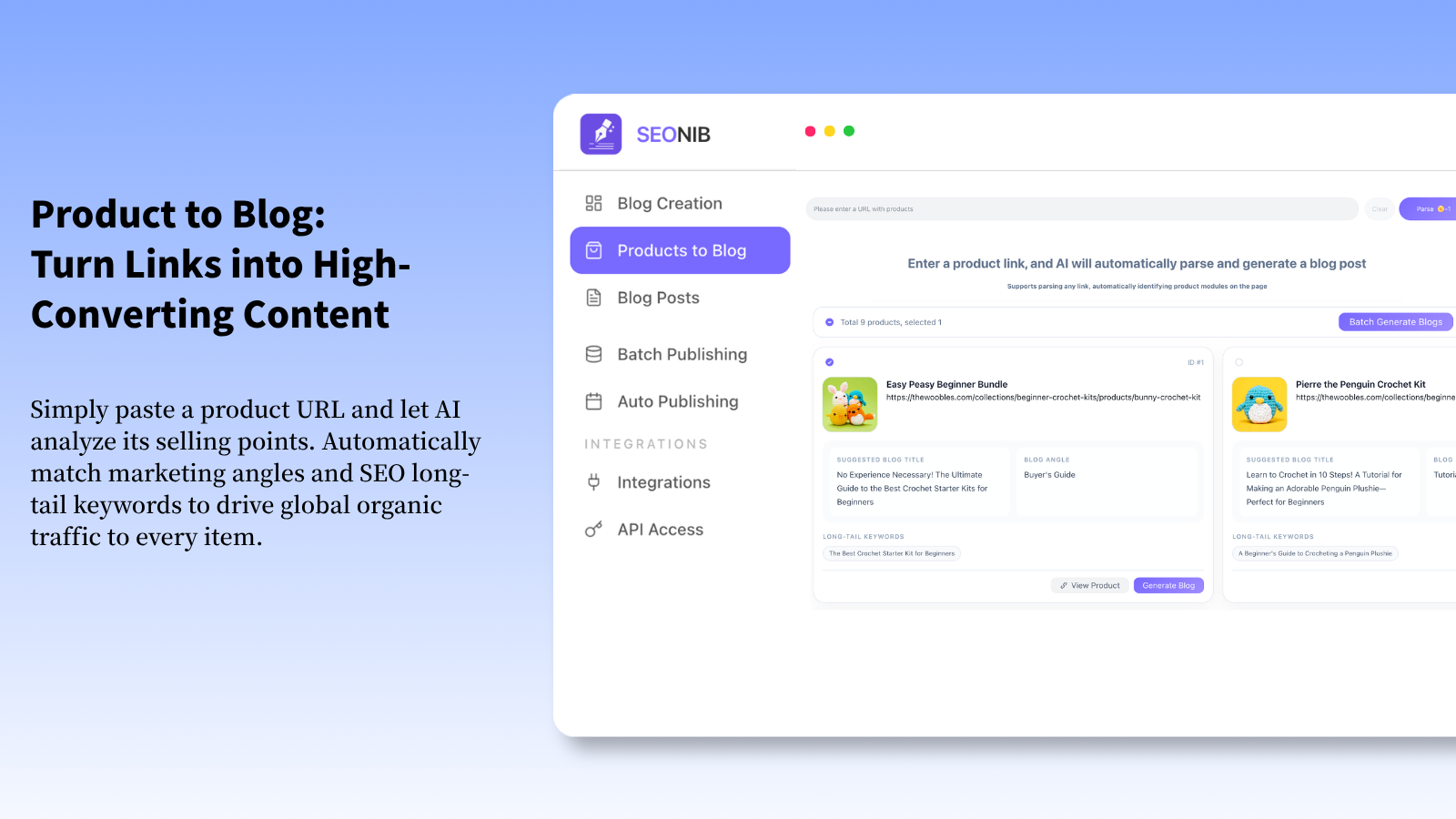
In the traditional approach, operators first review the product page, then find keywords, draft the article structure, and finally write the manuscript. The whole process is lengthy, and scaling it becomes pure manual labor.
SEONIB compresses this workflow into a shorter pipeline:
- Input the product link.
- The system automatically identifies product information, core selling points, and suitable expansion topics.
- Automatically generate an SEO blog.
- Automatically add titles, structure, FAQs, and internal‑link suggestions.
- One‑click publish to the independent site’s blog section.
This means you no longer need to brainstorm content from scratch for each product; each product link can “grow” its corresponding blog content, building a continuously accumulated organic‑traffic asset.
Why Blogs Bring More Sustainable Traffic
Paid traffic is obvious: it appears when you spend, and stops when you don’t.
SEO blogs, on the other hand, can be indexed, displayed, and recommended by search engines for a long time as long as the content quality and structure are solid.
The blogs generated by SEONIB are not just simple rewrites of product pages; they are built around search intent, such as:
- Who should use it.
- Which scenarios are most recommended.
- Differences from other products.
- How beginners should choose.
- Common issues during use.
These naturally cover more long‑tail keywords and are easier to gain stable exposure on Google. When a product blog consistently brings clicks, it ceases to be just an “article” and becomes a long‑term customer‑acquisition asset.
From Product to Content Matrix
SEONIB is better suited for turning product links into a set of content matrices rather than creating content piece by piece.
One product can generate a main blog and then expand into multiple related topics:
- Buying guide.
- FAQ answers.
- Comparison article.
- Usage tutorial.
- Scenario recommendation.
- Version differentiation.
Thus, originally isolated product pages become surrounded by blogs, category pages, and FAQ pages, forming a more complete internal content structure. Search engines find it easier to understand your site’s theme, and users can more easily locate the information they need within the site.
Especially Suitable for Cross‑Border E‑Commerce and Independent Sites
For cross‑border sellers, the biggest challenge is often not a lack of products but a lack of enough stable content to support organic traffic. SEONIB’s method of turning product links into blogs is especially suitable for:
- Shopify independent sites.
- Shopline independent sites.
- WordPress content sites.
- Multilingual overseas sites.
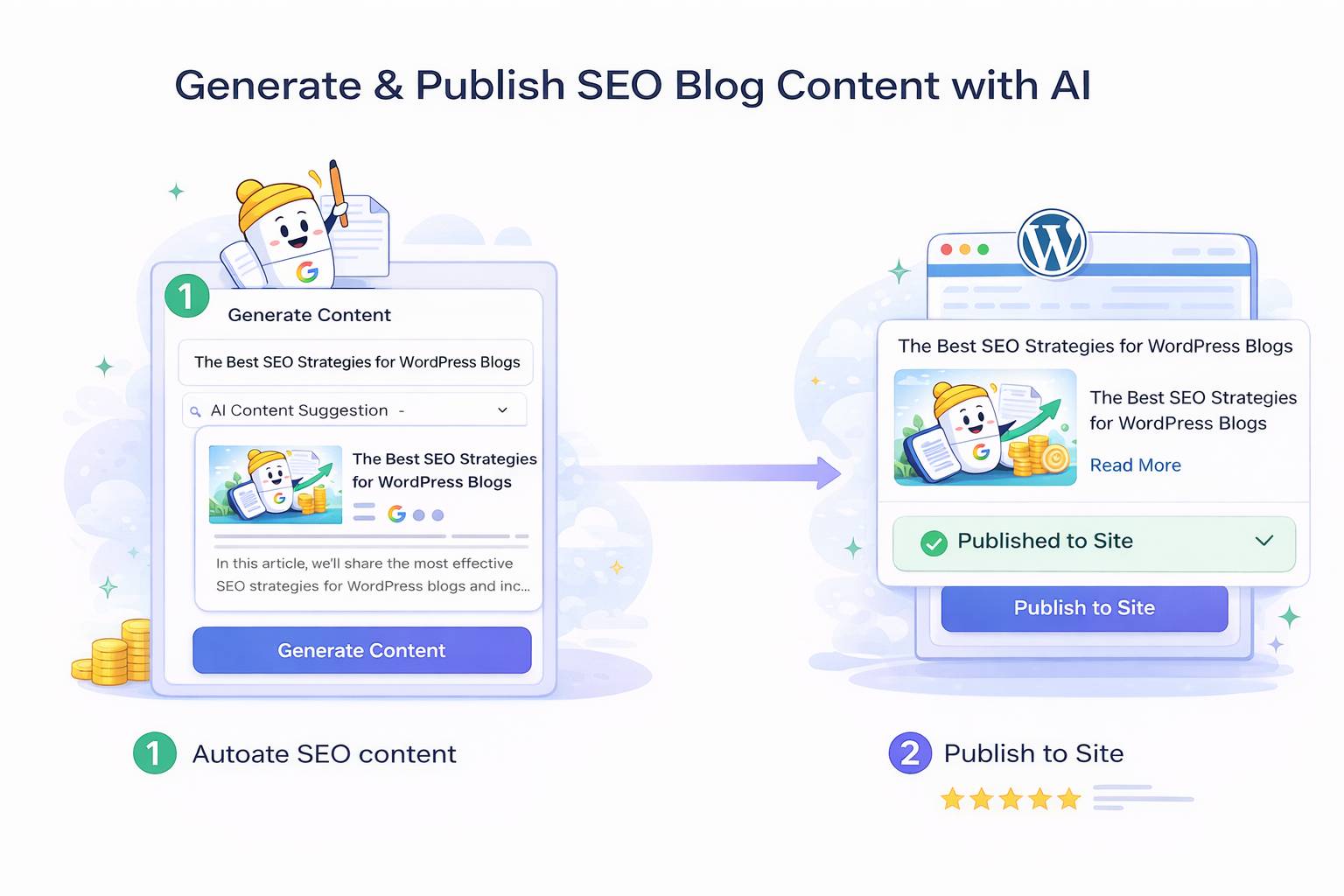
You can batch‑import product links, let the system automatically generate English, German, Spanish, and other language versions, and schedule continuous publishing. This not only reduces content costs but also keeps the site regularly updated, aligning with search engines’ preference for fresh content.
From “Selling” to “Site Nurturing”
Many independent sites have complete homepages and product pages but lack continuously added content across the site. SEONIB solves this “site nurturing” problem.
It turns products into starting points for content.
It turns links into entry points for natural traffic.
It turns content from a one‑off product into an asset that can be reused long‑term and continuously accumulate rankings.
When every product link becomes a sustainable, customer‑acquiring SEO blog, the site’s traffic structure shifts from “relying on ads for new users” to “relying on content for acquisition.” This is the growth model increasingly sought after by cross‑border sellers.
Closing
SEONIB’s real advantage is not that it can write articles, but that it can automatically transform product links into blog content that both search engines love and users want to read. For independent sites and cross‑border e‑commerce, this means lower content costs, higher production efficiency, and more stable organic traffic growth.
If you want your product pages to be more than just sales pages—becoming continuous search‑traffic entry points—SEONIB’s “product link → SEO blog” pathway is a highly worth‑trying direction.